










A high-quality driveway coating is a significant investment that serves as the first line of defense for your home’s curb appeal and structural integrity. While these advanced polymer or epoxy systems are engineered for extreme durability, they are not entirely “set it and forget it” solutions.
In the varied American climate—ranging from blistering summer heat to freezing winter cycles—preventive care is the deciding factor in whether a coating lasts for five years or twenty. Neglecting basic maintenance allows abrasive grit, automotive fluids, and organic debris to slowly compromise the surface finish, leading to premature wear or loss of luster.
By adopting a proactive maintenance mindset, you can protect the chemical bond of the coating, ensure maximum slip resistance, and keep your property looking professionally manicured year-round.
Implement a Consistent Surface Sweeping Routine
The most common cause of surface dulling is not heavy vehicles, but rather the “sandpaper effect” caused by fine dirt and pebbles. When tires roll over loose grit, they ground those particles into the coating, creating microscopic scratches that eventually trap more dirt.
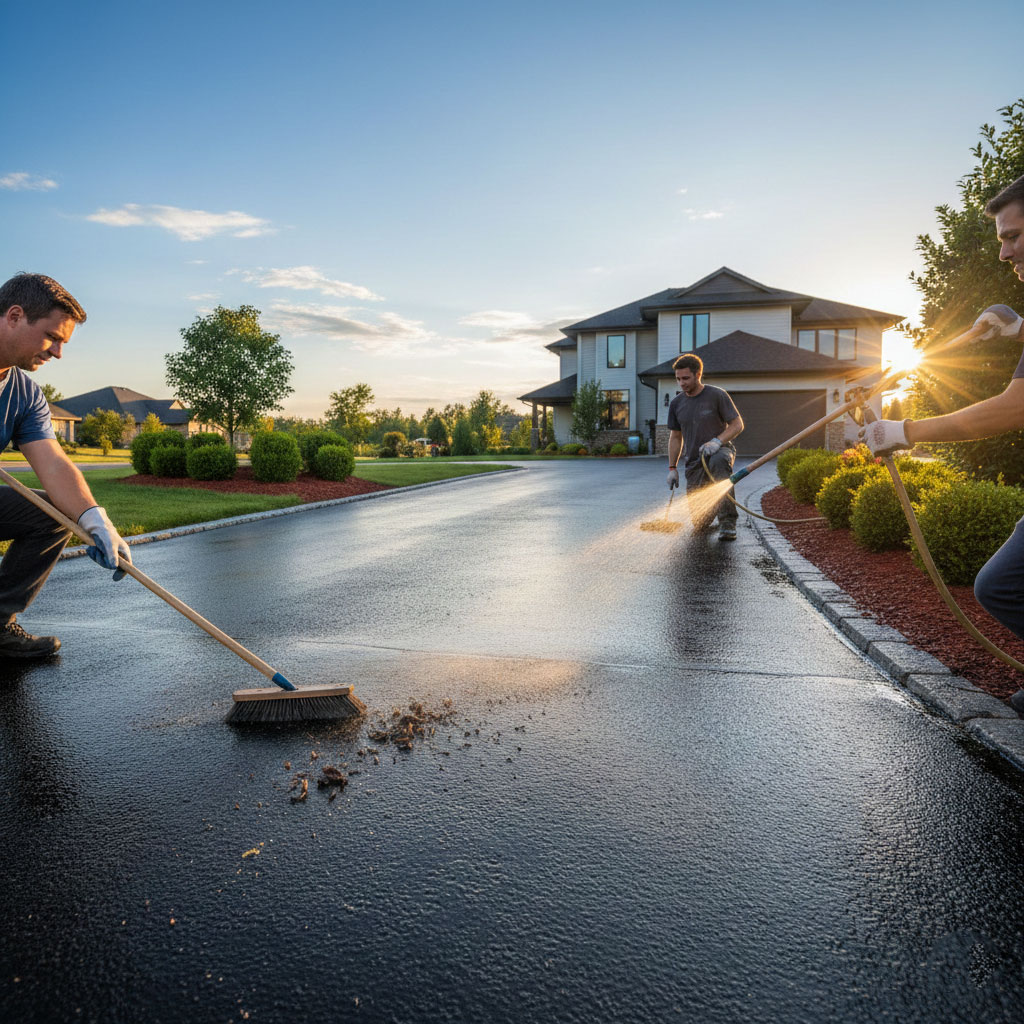
- Weekly Clearing: Use a stiff-bristle outdoor broom or a high-powered leaf blower to remove sand, silt, and dry leaves at least once a week.
- Organic Debris Removal: Pay close attention to corners and edges where wet leaves can accumulate, as rotting vegetation can produce tannins that stain even the most resilient finishes.
- After-Storm Cleanup: Following heavy rain or wind, clear away any branches or sediment that may have washed onto the driveway to prevent impact damage or scratching.
A clean surface is a long-lasting surface. By keeping the “grit” at bay, you ensure that the glossy or textured finish of your driveway remains intact and vibrant for the long haul.
Manage Automotive Fluid Spills Immediately
While professional-grade driveway coatings are designed to be chemically resistant, they are not completely indestructible. Corrosive fluids like gasoline, brake fluid, and battery acid can eventually soften or discolor the coating if allowed to sit for extended periods.
- The Blotting Technique: If you notice an oil or coolant leak, blot the spill with a rag or paper towel immediately rather than scrubbing, which can spread the fluid.
- Non-Abrasive Cleaners: Use a mild, pH-neutral dish soap and warm water to lift residual oils after the initial spill has been absorbed.
- Avoid Harsh Solvents: Never use paint thinners, acetone, or citrus-based cleaners that contain high acidity, as these can strip the protective topcoat.
Speed is your best ally when dealing with chemicals. Addressing leaks as soon as they happen prevents the chemical reaction that leads to permanent “ghosting” or peeling in the affected area.
Optimize Your Seasonal Cleaning Protocol
Beyond weekly sweeping, a deeper cleaning every few months helps remove the stubborn film caused by air pollution, pollen, and road salt. This process revitalizes the color and ensures that the anti-slip texture remains effective.
- Low-Pressure Rinsing: Use a standard garden hose with a spray nozzle to flush out the pores of the coating; avoid high-psi pressure washers that can potentially inject water under the edges of the coating.
- Soft Scrubbing: For high-traffic areas, use a soft-fiber floor scrub brush with a mixture of water and ammonia-free cleaner to lift embedded road film.
- Thorough Rinsing: Always rinse the surface until the water runs clear to ensure no soap residue is left behind, which can become slippery when wet.
A quarterly deep clean acts as a “reset” for your driveway’s appearance. This routine maintenance ensures that the surface remains as functional and safe as the day it was installed.
Practice Safe Snow and Ice Removal
For homeowners in northern states, winter presents a unique set of challenges. The tools and chemicals used to manage ice can be incredibly abrasive, making it essential to choose “coating-friendly” methods.
- Plastic Shovels Only: Avoid using metal-edged shovels or ice chippers, which can gouge the coating or catch on the edges of expansion joints.
- Safe De-Icing Agents: Opt for sand or specialized “coating-safe” ice melts rather than traditional rock salt (sodium chloride), which can cause white efflorescence.
- Snow Blower Caution: Ensure the “shoes” on your snow blower are adjusted to keep the metal auger from making direct contact with the coated surface.
Winter care is about preserving the mechanical bond of the coating. By using the right tools, you prevent the physical trauma that often leads to surface chipping during the coldest months.
Perform Annual Inspections for Minor Repairs
Small issues like hairline cracks in the underlying concrete or lifting at the expansion joints can escalate if left unaddressed. An annual “walk-through” allows you to catch these minor flaws before they require a full resurfacing.
- Check the Edges: Look for any areas where the coating may have chipped along the grass line or where the driveway meets the garage floor.
- Monitor Expansion Joints: Ensure the flexible sealant in the joints is still intact; if it has dried out or cracked, moisture can get under the coating.
- Evaluate the Topcoat: If the water no longer “beads” on the surface after a few years, it may be time to apply a fresh clear-coat to restore UV protection.
Early detection is the key to cost-effective property management. Taking twenty minutes once a year to inspect your driveway ensures that small maintenance tasks don’t turn into major renovation projects.
Ensure the Longevity of Your Property’s Foundation
Maintaining a driveway coating is a straightforward process that yields massive returns in both aesthetics and home value. By committing to a routine of regular cleaning, rapid spill response, and careful seasonal management, you are effectively extending the life of your exterior surfaces by years.
These simple preventive measures keep the “armor” of your driveway strong, ensuring it continues to resist the sun, rain, and heavy traffic that define the American outdoor environment. Protect your investment with the diligence it deserves, and your driveway will remain a stunning, durable centerpiece of your home for a lifetime.