









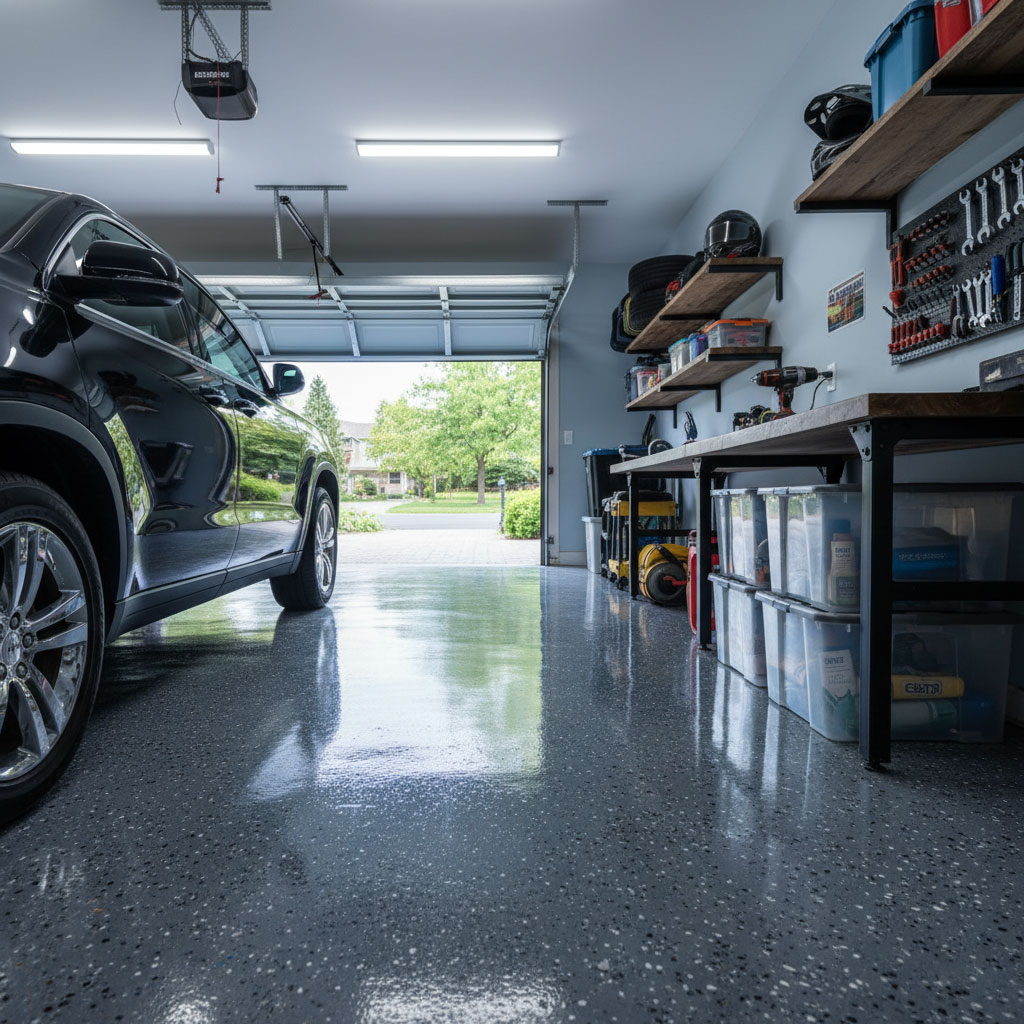
In regions where the summer sun regularly pushes thermometers past the 110-degree mark, your driveway is under constant environmental assault. Standard concrete absorbs an immense amount of solar radiation, leading to internal stresses that can compromise the structural integrity of your home’s entrance.
Investing in a high-performance driveway coating is the most effective way to shield your concrete from these extreme thermal cycles. By creating a protective barrier, you can prevent the premature aging and costly repairs that typically plague untreated desert driveways.
Reflecting Solar Radiation to Lower Surface Temperatures
Raw concrete acts like a thermal sponge, soaking up heat all day and radiating it back long after the sun goes down. Professional coatings are often engineered with “cool-surface” technology that utilizes infrared-reflective pigments to bounce sunlight away.
- UV Stability: High-quality resins like polyaspartic do not break down or “chalk” under intense ultraviolet exposure.
- Reduced Heat Absorption: Light-colored or reflective coatings can lower the actual surface temperature by up to 20 degrees.
- Comfort for Bare Feet: A cooler surface makes it safer for children and pets to cross the driveway during peak afternoon hours.
By reflecting a significant portion of the sun’s energy, the coating keeps the entire slab cooler. This reduction in heat absorption prevents the concrete from reaching the extreme temperatures that lead to surface degradation.
Preventing Thermal Expansion and Contraction Cracks
Concrete expands when it gets hot and contracts when it cools, a physical process that occurs daily in high-heat environments. Over time, this constant movement creates internal pressure that eventually results in unsightly and dangerous spiderweb cracks.
- Flexible Membranes: Modern coatings act as a flexible skin that moves with the concrete rather than fighting against it.
- Stress Distribution: The coating helps distribute thermal loads more evenly across the surface of the slab.
- Sealing Existing Fissures: Applying a coating seals minor hairline cracks, preventing them from widening during the next heat wave.
Standard epoxy is often too brittle for extreme heat, but advanced coatings offer the elongation properties necessary for desert climates. This flexibility ensures that your driveway remains a solid, continuous surface despite the changing weather.
Guarding Against Spalling and Surface Flaking
When concrete reaches high temperatures, any moisture trapped within the pores can turn into vapor, creating outward pressure. This process, combined with the sun’s drying effect, causes the top layer of the concrete to flake off, a condition known as spalling.
- Pore Sealing: The coating penetrates the concrete to block moisture from entering or exiting the slab.
- Reinforced Surface: It adds a hard-wearing wear layer that is significantly tougher than the concrete itself.
- Dusting Prevention: Stops the sun-damaged surface from turning into a fine white powder that tracks into your home.
A coated driveway is essentially armored against the elements, keeping the aggregate and cement paste locked firmly in place. This preserves the smooth, professional look of your property for years rather than months.
Eliminating Chemical Damage Accelerated by Heat
High temperatures act as a catalyst for chemical reactions, meaning that oil leaks, brake fluid, and gasoline become much more corrosive when the driveway is baking at 110 degrees. On an uncoated surface, these chemicals bake into the pores and create permanent, dark stains.
- Non-Porous Shield: Creates an impenetrable barrier that keeps automotive fluids on the surface.
- Chemical Inertness: The coating will not react with or be softened by common household chemicals, even in high heat.
- Easy Cleanup: Stains that would normally require a pressure washer can often be wiped away with a simple garden hose.
The combination of heat and chemicals is the fastest way to ruin a driveway’s appearance. A protective coating ensures that a minor car leak doesn’t turn into a permanent eyesore during the summer months.
Maintaining Aesthetic Brilliance Against Fading
The intense desert sun is a natural bleaching agent that can make even the most beautiful stamped or stained concrete look dull and grey within a few seasons. Professional coatings utilize UV-stable topcoats that lock in color and provide a consistent, high-end finish.
- Pigment Protection: The clear topcoat acts like a high-SPF sunscreen for the colors underneath.
- Consistent Sheen: Choose from matte, satin, or high-gloss finishes that won’t lose their luster over time.
- Enhanced Curb Appeal: A vibrant, well-maintained driveway significantly boosts the overall value of your property.
Protecting the visual appeal of your home is just as important as protecting the structure. With a UV-resistant coating, your driveway remains a standout feature of your landscape rather than a faded reminder of the summer heat.
Future-Proofing Your Home Against the Desert Sun
A driveway is one of the largest and most visible components of your property, and leaving it exposed to 110-degree temperatures is a gamble with your home’s value. By applying a professional coating, you are making a proactive choice to extend the life of your concrete and maintain a pristine exterior.
This investment pays for itself by eliminating the need for frequent pressure washing, crack filling, or eventual slab replacement. Don’t wait for the next record-breaking heat wave to see the damage—fortify your driveway today and enjoy a cooler, more durable surface for decades to come.